Disclosure: This post contains affiliate links. If you buy through them, we may earn a commission at no extra cost to you. We only recommend tools our editor has handled or researched in depth. Learn more
If your cutting board is soft plastic, wood, or rubber, it’s almost certainly fine for a Japanese knife. Stop using glass, stone, or ceramic boards, and think twice about bamboo. But which board you own is only half the story — in our view, how stable it is on your counter and how you use the knife on it matter too, and that’s something no spec sheet tells you. We photographed the boards in our own kitchen, cut marks and all, to see what that actually looks like.
Quick answer: which cutting board is fine, which to stop using
The verdicts below are ours; the “edge-friendliness” and care notes are cited to the specific source behind each one.
| Material | Edge-friendliness | Care effort | Our verdict |
|---|---|---|---|
| Soft, thick polyethylene (plastic) | Good — fine for Japanese knives, per this retailer’s ranking | Low | Keep using it |
| Edge-grain or end-grain wood | Good — wood is easier on an edge than resin | Medium | Keep using it, or a nice step up |
| Hinoki (Japanese cypress) | Good — soft wood that gives under the edge | Medium-high; wet before use, dry upright; standard care guidance is to avoid the dishwasher, so check the product’s instructions | Nice upgrade, not required |
| Synthetic rubber (e.g., Parker Asahi Cookin’ Cut, Hasegawa) | Good — soft surface; in Hasegawa’s boards, a wood core helps keep the board straight | Medium; hand wash and avoid heat for Cookin’ Cut (not dishwasher-safe); some rubber boards such as Hasegawa are sold as dishwasher-safe — check the product’s care label | Good if you want the pro feel |
| Bamboo | Weaker — harder than most wood and glue-heavy, which dulls thin edges faster | Low-medium | Consider replacing |
| Glass, stone, ceramic | Poor — glass and ceramic chip and dull a Japanese edge; treat stone the same way | Low | Stop using it for a Japanese knife |
Thin, hard plastic (the kind that flexes and feels stiff at the same time) sits in a gray zone — a couteliernola.com ranking separates it from soft, thick plastic and rates it worse for the edge. Our own experience below shows why “plastic” alone isn’t a complete answer.
Does a cutting board dull a knife?
In general, every cutting board dulls a knife a little — the edge repeatedly meets the surface, and no board is perfectly soft. What changes is how much, and how likely the edge is to chip instead of just dulling. One Japanese knife maker, Sakai Ichimonji Mitsuhide, puts it simply: wood is much easier on an edge than resin, plastic is hard and damages knives more easily (though it’s easy to keep hygienic), and rubber sits in between — gentler on the edge than plastic and easier to care for than wood, but weak against heat.
A retailer that works from its own sharpening bench makes a similar distinction: soft, thick plastic is acceptable, but thin, hard plastic is worse, because deep grooves in a worn board catch the edge and put stress on it with every cut. In our view, that’s likely part of why a thin Japanese edge is more likely to chip — not dull, chip — on a genuinely hard surface: there’s nowhere for the impact to go.
What we saw on our own boards
Our editor in Japan has two boards in daily rotation: a thin, black, flexible sheet board they reach for most, and a heavier white plastic board with a black handle frame that they use less often. Both have been in use for two to three years.
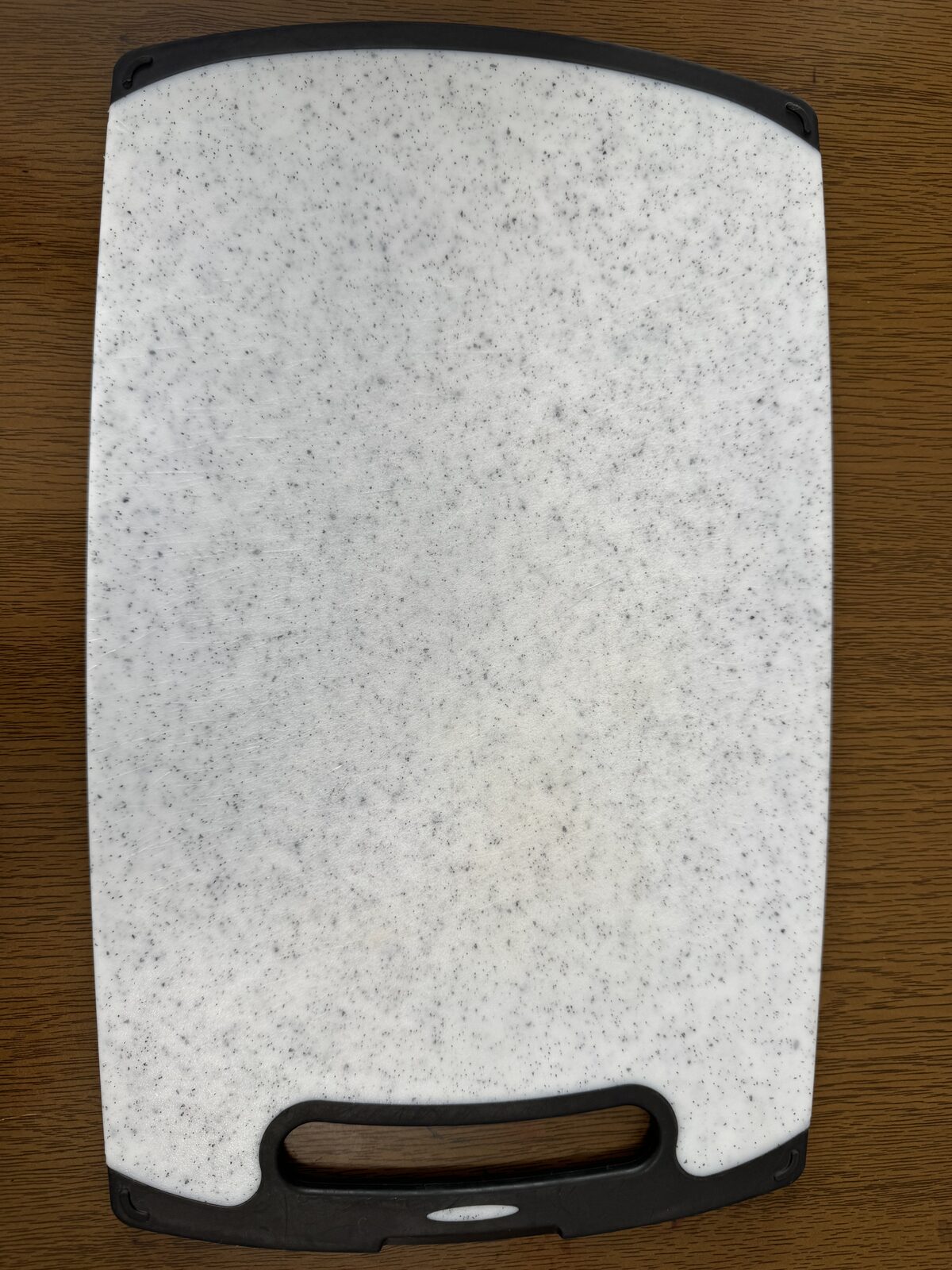
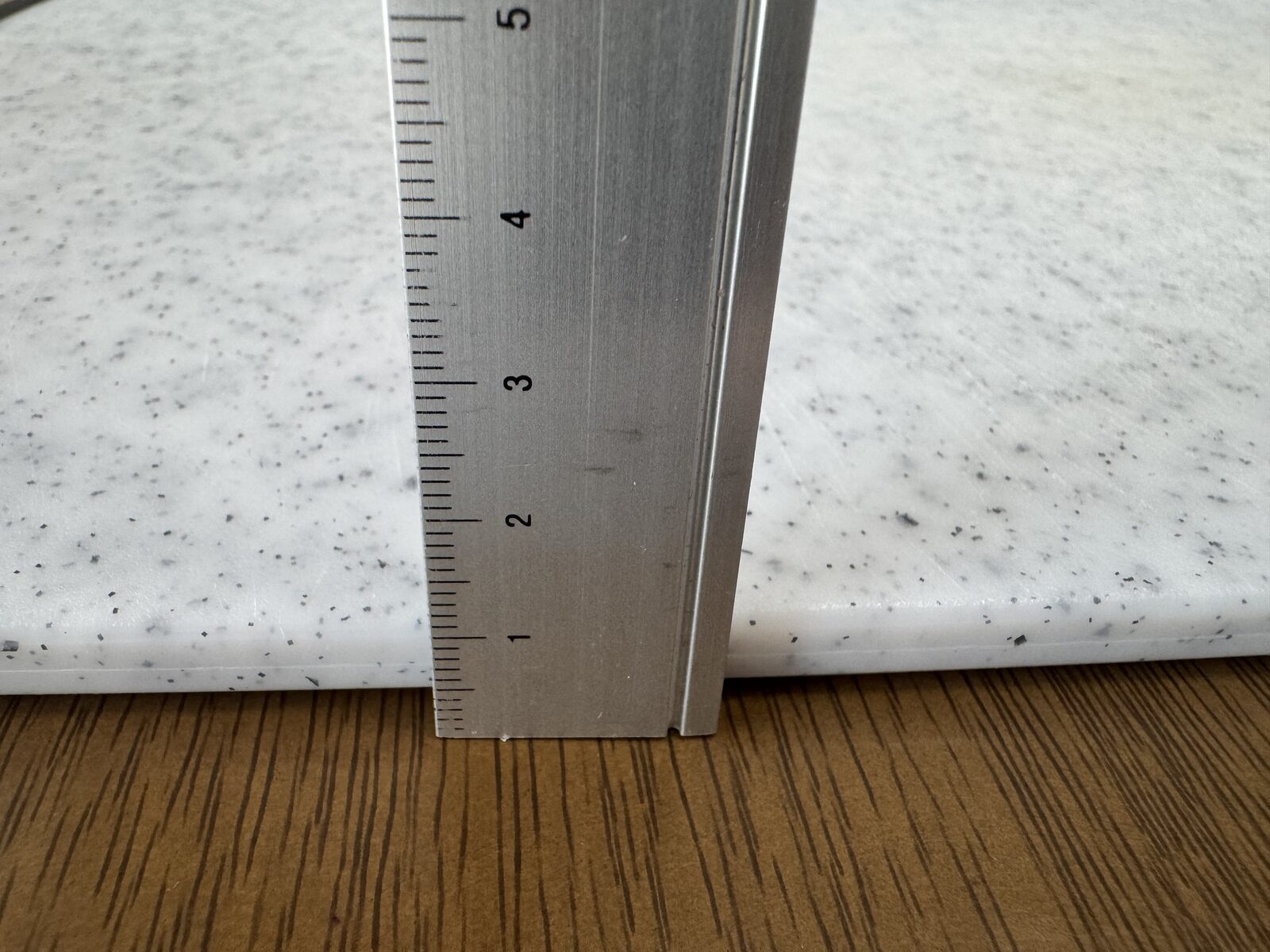
Cutting tomatoes and similar foods on the black sheet board, our editor noticed the board is light and slides around, so they have to hold it down while cutting, and pull the knife through with extra force at the end of the cut; there’s no real sound when the blade meets the surface. On the white board, the extra weight keeps it stable, so they only need to hold it down lightly while cutting — but the sound is different: a hard, clanking “kan-kan” sound. The white board is about 1 cm (0.4 in) thick.
The black sheet board also carries a lot of visible knife marks — our editor isn’t sure which of their knives left them, and says the scratches don’t bother them.
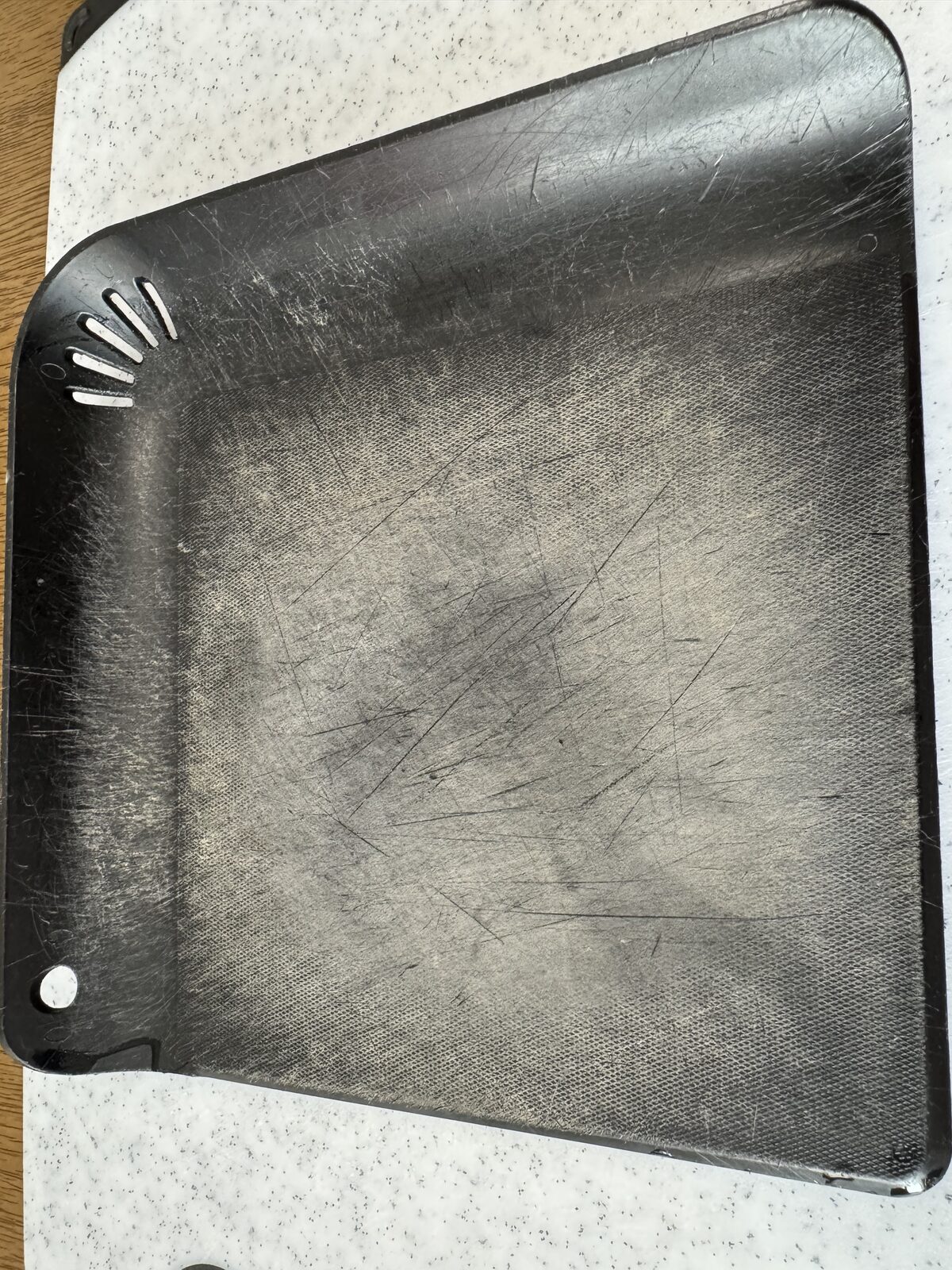
Neither board is obviously the better choice — the one that slides and shows the most visible marks in our photos is the one our editor reaches for daily anyway. The light board slides and needs to be held down and pulled through with extra force; the heavier board stays stable and needs only a light hold.
Day to day, our editor washes both boards with warm water and dish soap. The white board stains more easily, so after cutting carrots or other pigmented vegetables, they clean it with bleach.
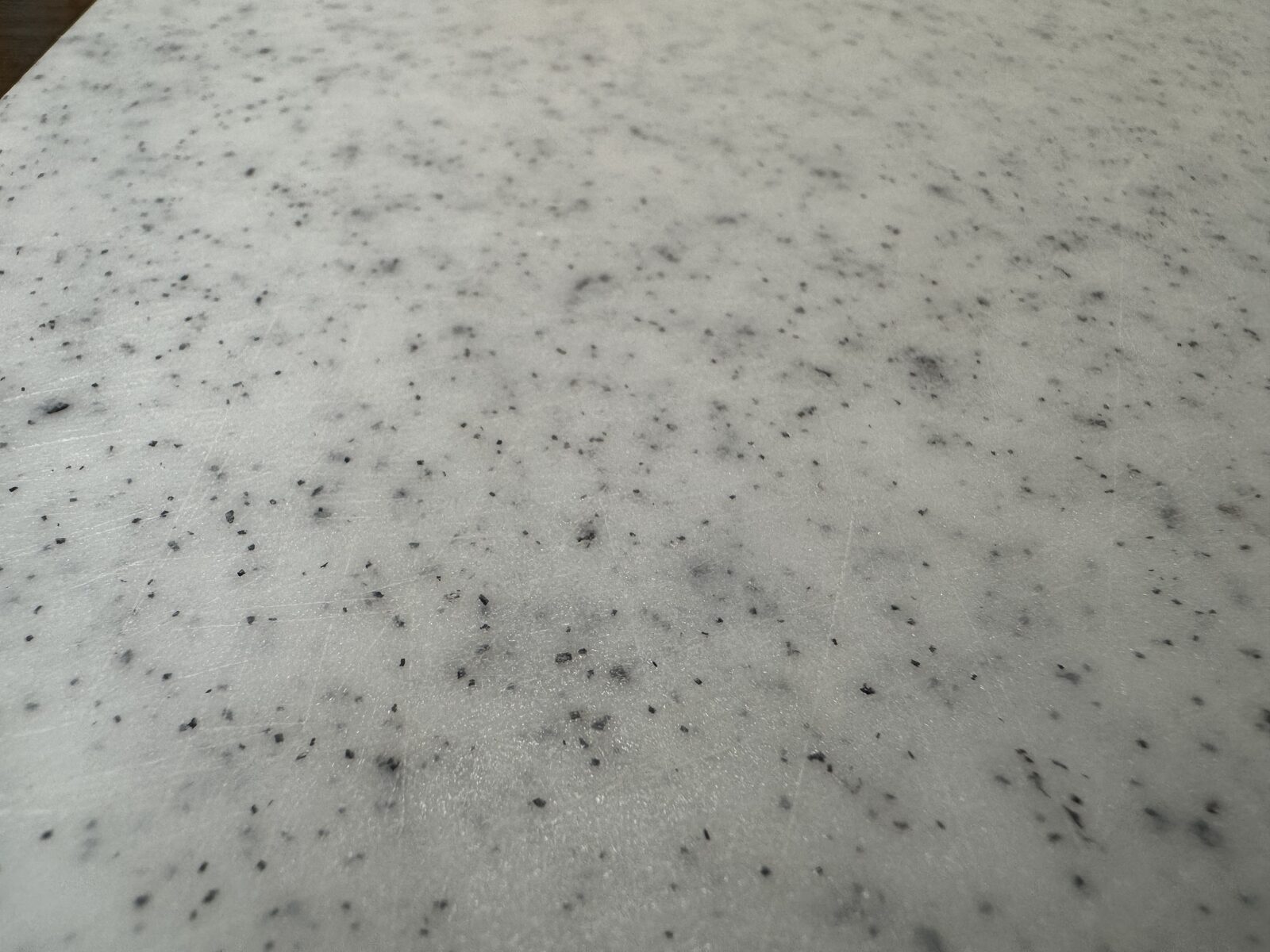
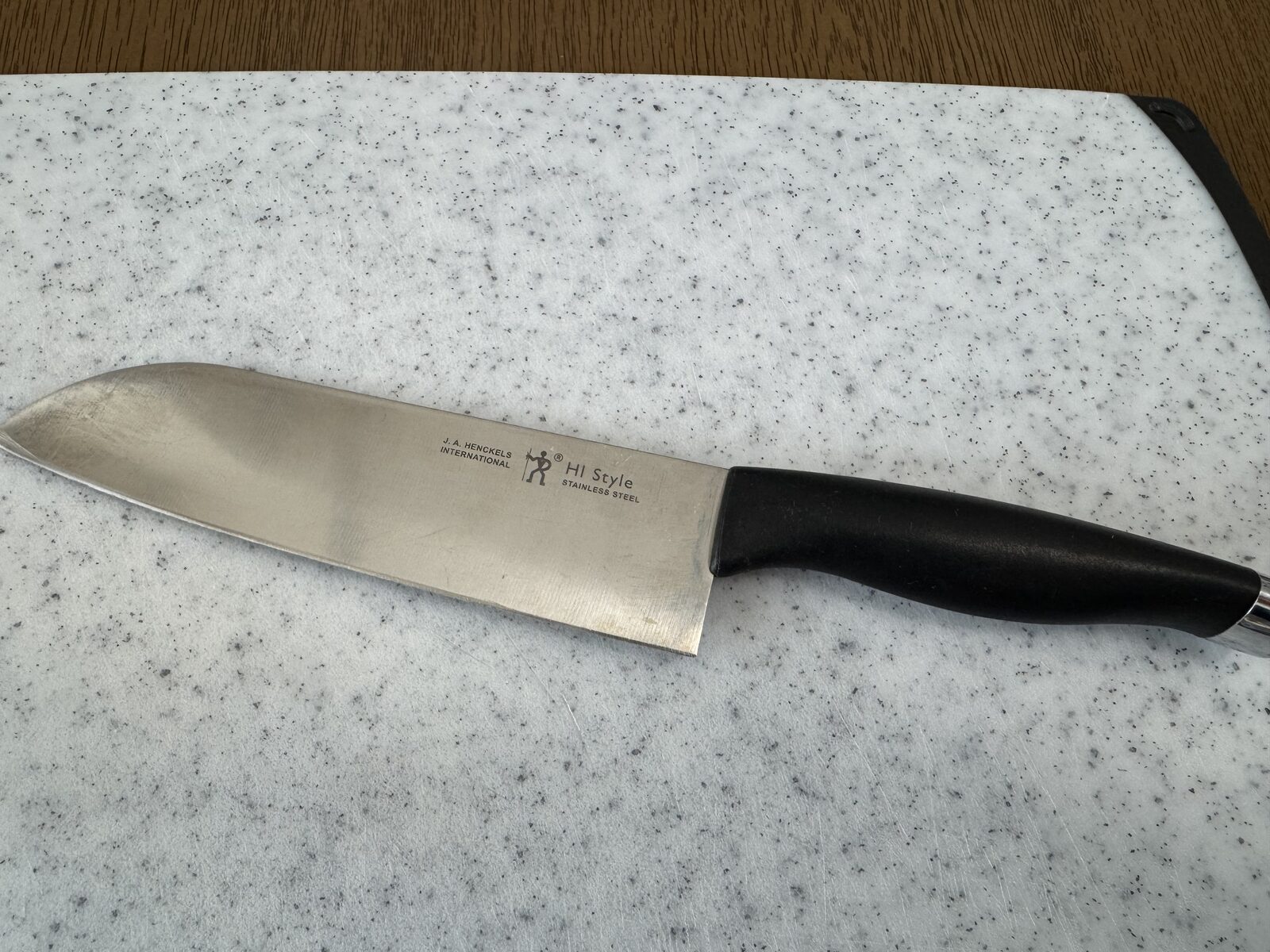
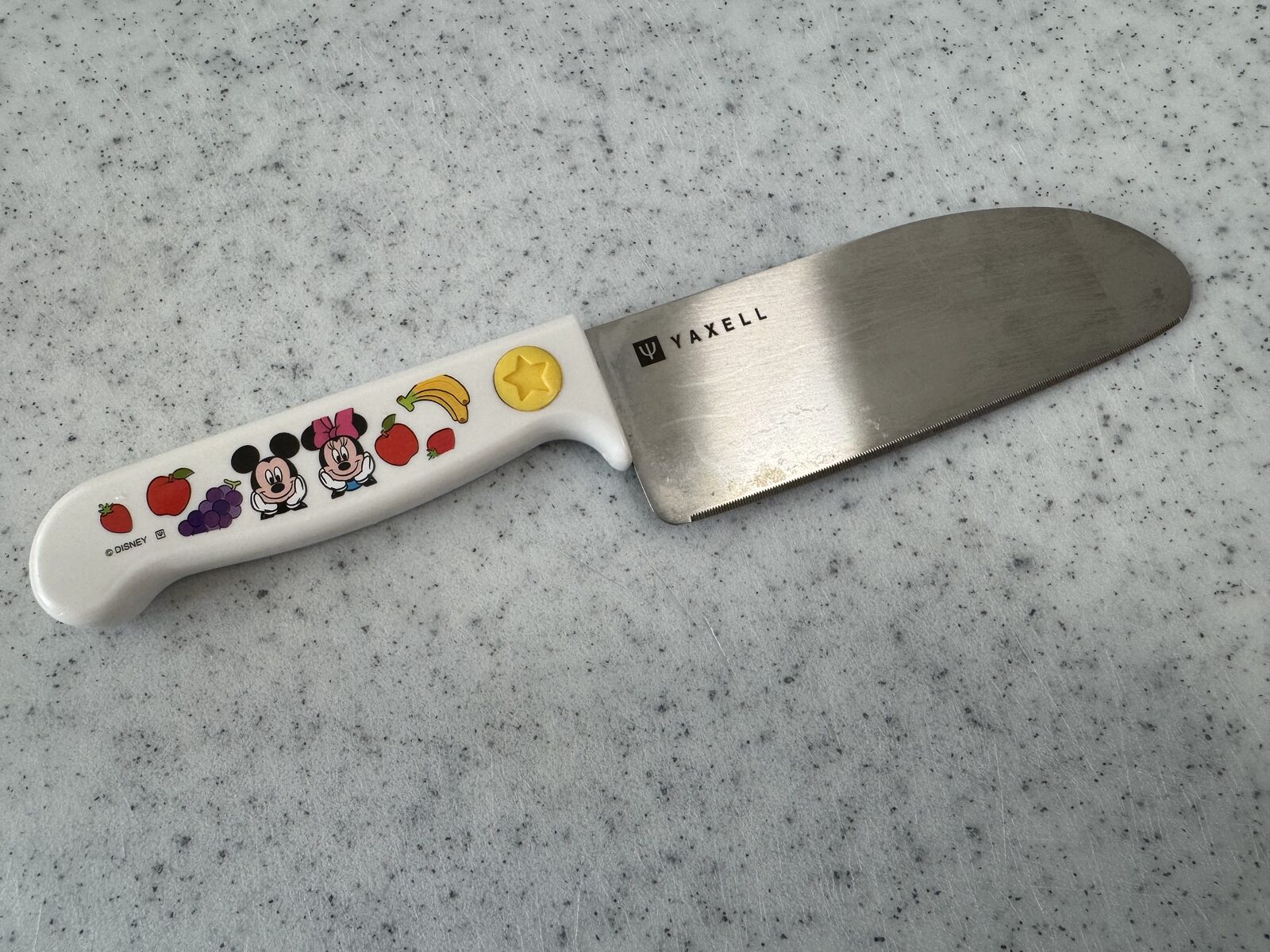
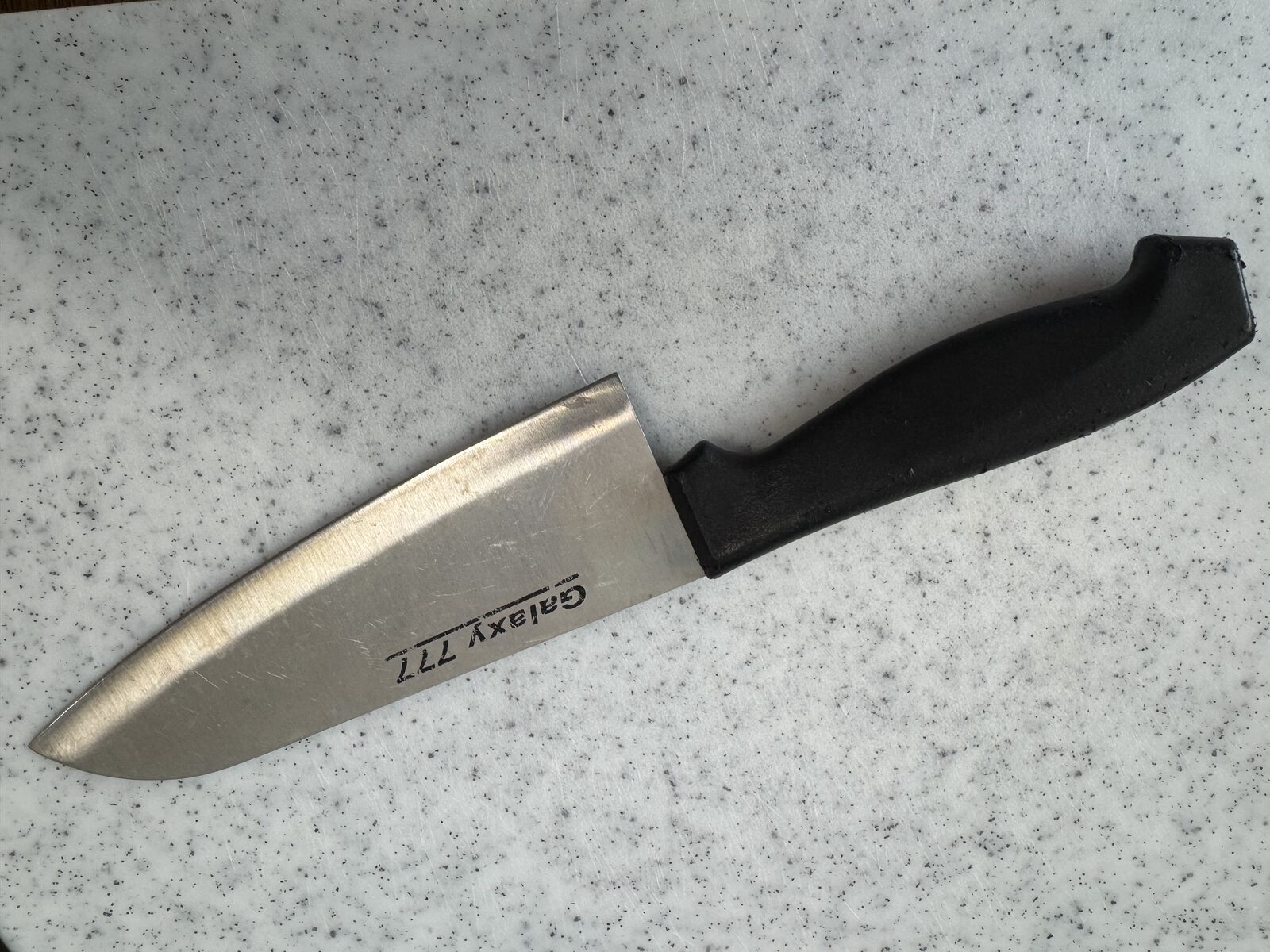
Our editor keeps three knives, each for a different job. Their most-used knife, a Henckels “HI Style” santoku (an all-purpose Japanese kitchen knife; Henckels is a Zwilling-owned brand), is light and easy to cut with. A children’s safety knife in the house needs a back-and-forth sawing motion to cut through anything, which makes it less likely to cause an injury. A heavier knife, a “Galaxy 777,” comes out for bigger or harder vegetables.
Glass and ceramic: not tested here
This article doesn’t include a glass or ceramic test or a paper-cutting sharpness test. The two cited retailer guides agree: glass is described as the worst common surface for a knife edge, and glass, ceramic, marble, and granite are all listed by another guide as materials to avoid because they chip and degrade a Japanese edge. We treat stone and slate the same way as a precaution. If you’re using a glass “counter saver” board with a Japanese knife, that’s the one swap worth making regardless of what else you do.
What Japanese kitchens actually use
This part is closer to home for our editor than to any single survey. In their own household, the small kitchen means a small board is the everyday tool, and a bigger board comes out when there’s something big to cut. Growing up in their parents’ house, which had a larger kitchen, the family used a wood board — one that grew mold easily, so when that happened they’d plane the moldy surface off with a kanna (a Japanese hand plane). Our editor has also heard that hard rubber boards have become more popular recently, though that’s an impression, not a count.
On the professional side, synthetic-rubber boards are also marketed to professional kitchens. Parker Asahi’s Cookin’ Cut, a synthetic rubber board, is described by one retailer as used by professional chefs, with a rubber surface soft enough to let the edge sink in slightly, which the retailer says helps knives stay sharp longer; it’s not dishwasher-safe, can warp from heat (so no hot pots on it), and can be scrubbed and bleached, with light discoloration sandable out. A 240 × 210 × 13 mm (about 9.4 × 8.3 × 0.5 in) size was listed at about ¥6,500 in that retailer’s article (checked Sep 2026); check the current price before you buy. According to a Parker Asahi employee’s note post, the company made Japan’s first synthetic rubber cutting board in 1965, and mixing wood powder into the rubber gave it a wood-like feel under the blade. Separately, Hasegawa boards use a solid wood core wrapped in a soft rubber coating; the core is credited with keeping the board straight, the rubber surface is softer than wood or bamboo, and the retailer says many Japanese chefs value that combination for single-bevel knives — and unlike Cookin’ Cut, Hasegawa boards are sold as dishwasher-safe, so check the specific product’s care label rather than assuming all rubber boards behave the same.
We couldn’t find a reliable, current count of what share of Japanese households use thin plastic versus wood versus rubber boards, so we’re not going to hand you a percentage — that’s a gap, not a claim we’re comfortable making.
Your current board, checked
- Soft, thick plastic, such as a soft HDPE board, with no deep grooves: keep using it. Wash and dry it like any kitchen tool.
- Thin, hard plastic with a lot of grooving: it still works, but deep grooves catch the edge and add stress with every cut — if the surface has fuzz, deep ruts, or has started to warp, that’s a fair replacement point.
- Edge-grain or end-grain wood board: keep using it; wood is consistently rated as easy on an edge.
- Bamboo board: it’s harder than most wood and typically glue-heavy, which dulls a thin edge faster than a comparable wood board — worth replacing if you use your Japanese knife on it often.
- Glass or ceramic board: stop using it for the Japanese knife specifically (treat stone the same way as a precaution); keep it for other jobs if you like.
Habits that matter more than the board
Two habits can also help protect the edge. Don’t scrape food off the board with the cutting edge — flip the knife over and use the spine to push ingredients aside. Don’t twist the blade while you cut; let the edge do straight work.
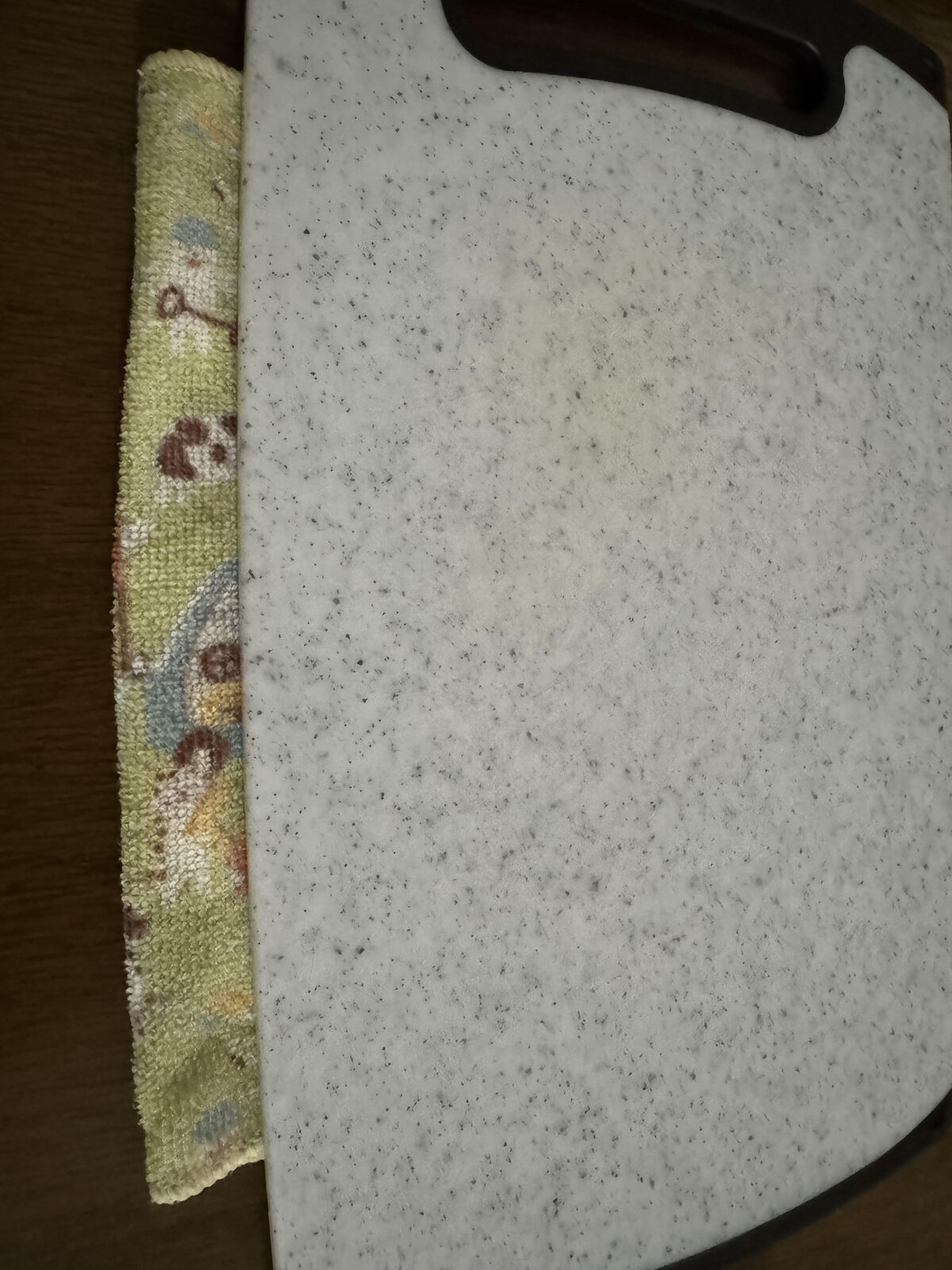
On our editor’s light board, sliding meant holding it down and pulling with extra force. A cloth, rubber mat, or non-slip liner underneath a board is a common way to help stop that kind of sliding. One photo shows a folded cloth tucked under one edge of the white board.
The board is only part of keeping an edge. For the rest of the routine — washing, drying, storing, and what to do about rust — see how to take care of a Japanese knife.
Should you upgrade to hinoki or rubber?
If your board is already soft, thick plastic (such as a soft HDPE board), edge-grain wood, or synthetic rubber, you don’t need to buy anything. In our view, an upgrade makes more sense if you use single-bevel knives (sharpened on one side only, common on traditional Japanese blades), cut a lot of fish, or you’re currently using glass or bamboo and want to replace it with something nicer than plain plastic. Both hinoki and rubber boards ask more of you in return: hinoki needs to be wetted before use and dried standing up, and standard care guidance for conventional hinoki boards is to avoid the dishwasher — check the individual product’s instructions; a board like Cookin’ Cut can warp if hot cookware touches it and isn’t dishwasher-safe, though care varies by brand — some rubber boards, such as Hasegawa’s, are sold as dishwasher-safe, so check the product’s own instructions.
Hinoki cutting board
Hinoki (Japanese cypress) is a relatively soft wood — one Japanese retailer notes a commonly cited Janka hardness of about 510–800 lbf — and a maker of hinoki boards says the wood gives slightly under the knife, which means less impact and less dulling than a harder surface. Care is simple but not casual: wet the surface lightly before use, wash it soon after cooking, and dry it standing up rather than flat; don’t soak it or run it through a dishwasher. We don’t have a reliably sourced price range for hinoki boards as sold in the US, so we’re leaving that out rather than guessing — check the current price where you buy: hinoki cutting boards at Hocho Knife
Synthetic rubber cutting board
A retailer describes Parker Asahi’s Cookin’ Cut, a synthetic rubber board, as edge-friendly and easy to maintain — it can be scrubbed and bleached, and light staining can be sanded out, but it shouldn’t meet a dishwasher or a hot pan. Hasegawa’s version wraps a solid wood core in a soft rubber coating; the retailer says the core keeps the board straight and the coating protects the wood from moisture, and sells it as dishwasher-safe. Neither is a must-buy if you’re already happy with plastic.
Our take on the Hasegawa: for its “Labrara Karugaru” (抗菌ラバーラかるがる) line, the maker says the wood-core rubber board is about 30% lighter than a solid resin board, and lists it as dishwasher-safe as long as the water stays at 85°C or below. That combination — lighter to handle, easy to clean in the dishwasher — makes it a fit for anyone who wants the pro rubber feel without extra weight or hand-washing.
Our take on Cookin’ Cut: one retailer describes its surface as surprisingly hard, yet with enough give for the edge to sink in slightly. It’s a good fit if you want that pro-kitchen feel and don’t mind the extra care it asks for: hand wash only, no dishwasher, and keep hot pans off it. Check the current price before you buy.
FAQ
Is bamboo bad for Japanese knives?
Not disqualifying, but not ideal. Bamboo is harder than most wood and typically has a lot of glue holding its strips together, both of which dull a thin Japanese edge faster than a comparable wood board.
Can I put a hinoki board in the dishwasher?
Generally no. Standard care for hinoki is to wet it before use, hand wash it soon after cooking, and dry it upright — not to soak it or run it through a dishwasher. If a specific product you’re considering claims to be dishwasher-safe, treat that as an exception you should confirm with the seller rather than the default.
Is an end-grain board worth it?
Wood in general is rated as a good, edge-friendly material for a Japanese knife, and soft plastic is also considered acceptable. We don’t have a source that specifically ranks end-grain construction ahead of edge-grain wood, so treat that as a matter of preference rather than a proven edge benefit. It’s a reasonable upgrade if you’re buying new and want a knife-friendly wood surface, but it isn’t something you need to replace a perfectly fine plastic or edge-grain board for.
Sources
The facts in this guide were checked against these pages (accessed September 2026), alongside our editor's own notes and photos. Pages marked (in Japanese) are written in Japanese.
- Coutelier: The Best Cutting Boards for Japanese Knives (and the Ones That Best Cutting Boards for Japanese Knives (What to Avoid)
- Sakai Ichimonji Mitsuhide: まな板の素材にいもこだわりを。おすすめや材質の違い (in Japanese)
- Shun (Kai USA): Hinoki Wood Cutting Boards
- Tsukushi: Japanese Cutting Board Manaita: Why Hinoki Wins
- Knifewear: Hasegawa: The BEST Cutting Boards for Your Knives?
- Global Kitchen Japan: This Pro-Quality Board Just Became More Accessible
- Seido: How to Properly Maintain a Japanese Knife
- Henckels: Our Family of Brands
- note: アサヒクッキンカットのあゆみ (in Japanese)
- Shun (Kai USA): Blog: Caring for Your Japanese Knives: Storage, Cleaning & Maintenance
- Hasegawa: 抗菌ラバーラかるがる (in Japanese)
Written by the Japanese Toolbox AI editorial team and reviewed by Ken, our editor in Japan, who uses the boards and knives shown in the photos. Approved for publication by Ken on September 24, 2026. How we work · @JapaneseToolbox on X